Adolf Anderssen
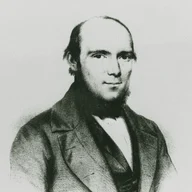
▶ Videos about Adolf Anderssen on ChessTube (4)
Beginnings
Born in Breslau, in Silesia — today Wrocław, in Poland — on 6 July 1818, the son of the merchant August Heinrich Anderssen. His father taught him chess when he was nine. The rest he learned from a book: the fifty games between La Bourdonnais and McDonnell collected by William Lewis in 1835.
He studied mathematics and philosophy at the University of Breslau and graduated in 1847, aged twenty-nine. But he first made his mark as a composer: in 1842 he published a collection of sixty problems, and for the next ten years he was among the most important problemists of his time. He often began a solution with a quiet move, unusual back then: Herbert Grasemann wrote that he had opened “the gate to the modern era of the chess problem”.
Date and place of birth, the age at which his father taught him, his studies in Breslau and the 1842 collection of sixty problems: Adolf Anderssen, English and German Wikipedia. His father’s name, the quiet move and Grasemann’s verdict (Problemschach, 1955): German article only. Lewis’s book and the 1847 degree: English article only. The English article gives the collection’s title in the singular, the German one in the plural, Aufgaben für Schachspieler.The professor of Breslau
Anderssen was never a professional player. He taught at the Friedrichs-Gymnasium in Breslau, where he became a professor, and fitted chess into the school holidays: that was when he played his tournaments. In 1865 the university of his city gave him an honorary doctorate.
He never married. He lived with his widowed mother and a sister, and supported them. Reuben Fine noted the contrast between the daring of the player and the caution of the man in everyday life.
His teaching, the professorship, the 1865 honorary doctorate, his mother and sister, and Fine’s remark: Adolf Anderssen, English Wikipedia. That he played only in the holidays: German article. The two articles disagree on his subjects: mathematics in the English one, mathematics and German in the German one.1851: London
In 1851, for the Great Exhibition, London staged a great international tournament, the first of its kind, and Germany sent him. He hesitated over the cost of the journey: Howard Staunton, the organiser, offered to pay it if he failed to win a prize.
The tournament was a knock-out, with mini-matches getting longer each round. Anderssen beat Kieseritzky, then Szén, then Staunton himself 4–1 in the semi-final, and Wyvill in the final. In our archive that is twenty-one games: fourteen won, two drawn, five lost, 15 out of 21 — exactly the published score. He had made a pact with Szén: whichever of them won the tournament would give the other a third of the prize.
He won two thirds of the £500 at stake. From that day he was regarded as the strongest player in the world, even though nobody yet called him world champion: the title did not exist.
The invitation, Staunton’s offer, the pact with Szén, the prize and his standing as the world’s strongest player: Adolf Anderssen, English Wikipedia, which calls it “the first international chess tournament”. The opponents round by round: both articles. The twenty-one games and their score are counted on our archive and match the table in the German article.The Immortal and the Evergreen
Two of the most famous games in history are his, and neither was a tournament game. The first, on 21 June 1851 in London, just after the tournament, against Lionel Kieseritzky: a casual game in which he sacrificed a bishop, both rooks and his queen, and mated with his minor pieces. Today it is called the Immortal Game.
The second, in Berlin in 1852, against Jean Dufresne: casual too, and here too the material he gave away came to more than a queen and a piece. It is the Evergreen Game. Dufresne is, in our archive, one of the opponents he faced most often: thirty-two games, twenty-five won.
The names were given by others, later. Who and when, the sources we have do not say, and neither do we.
Date, opponent and sacrifices of the two games: Adolf Anderssen, English and German Wikipedia. The thirty-two games against Dufresne and their score are counted on our archive, where the two games appear under their names: Immortal game and Evergreen.1858: Morphy
In 1858 a twenty-one-year-old American, Paul Morphy, arrived in Europe, and in Paris the two played a match. Anderssen lost it clearly: two wins, two draws, seven defeats. He could attack like nobody else; Morphy understood better when to attack, and how to prepare the attack.
He made no excuses. He openly admitted that the greater talent had won. And against Morphy he three times played a very strange opening, 1.a3: one win, one draw, one loss. Today it is called Anderssen’s Opening.
The score of the match: Adolf Anderssen, English and German Wikipedia. That he acknowledged Morphy’s greater talent: German article, which reports it without quoting him word for word. The three results with 1.a3: English article; the German one only says he beat Morphy with that opening. Our archive has seventeen games against Morphy, casual ones included: that is why they do not match the eleven of the match.1862: London again
He returned to London in 1862 for the first great international round-robin, in which everyone played everyone. He won it losing a single game, to the Reverend John Owen. Louis Paulsen was second; Wilhelm Steinitz, aged twenty-six, was sixth.
The format, the win, the only defeat and the places of Paulsen and Steinitz: Adolf Anderssen, English and German Wikipedia. The score is 12 out of 13 in the English article and 11½ out of 13 in the German one, so we do not give it.1866: Steinitz
In the summer of 1866, in London, he played a match against Steinitz. He lost it 8–6, without a single draw, and Steinitz won the last two games. In our archive that is fourteen games, six won and eight lost: the same result.
It was not a match for the title, which did not yet exist. But it is the handover: Anderssen’s attacking style begins to give way to Steinitz’s positional play. Nearly fifty, he set himself to study endgames and positional play. Two years later he beat Zukertort in a match, 8½ to 3½.
The result, the absence of draws, the last two games, the study of endgames and the 1868 match with Zukertort: Adolf Anderssen, English and German Wikipedia. The two articles read the match differently: the German one says Steinitz, after Anderssen’s death, used it to call himself world champion; the English one that the match was not defined as a title match. The fourteen games are counted on our archive.Baden-Baden, Vienna, Leipzig: the last decade
In 1870 he won Baden-Baden, ahead of Steinitz, Neumann, Blackburne and Paulsen. At Vienna 1873, aged fifty-five, he was third with 19 out of 30: in our archive seventeen wins, four draws and nine defeats, the same score.
In 1877 Leipzig held a tournament in his honour, for the fifty years since he had learned the moves. He came second. And on that occasion, on 18 July 1877, the German chess federation, the Deutscher Schachbund, was founded.
In Paris, in 1878, his health was already failing: he was sixth, with 12½ out of 22. The most recent games we have of him are from that year.
Baden-Baden 1870 with the players he left behind: Adolf Anderssen, English Wikipedia; the two articles agree on the 11 points but not on the number of games. Vienna 1873, Paris 1878 and the Leipzig celebration: both articles, which however give different scores for Leipzig, so we do not give it. The founding of the Deutscher Schachbund on that occasion: German article. The Vienna score is counted on our archive.gm_ZVrhQqJEiAhB: scacchiera giocabile, con la partita completa sotto.
gm_FBXTyewTeuGY: scacchiera giocabile, con la partita completa sotto.
gm_teEx_zTyd6FC: scacchiera giocabile, con la partita completa sotto.
gm_1BtUR5j3Nn5C: scacchiera giocabile, con la partita completa sotto.
gm_r_7u8JaxGHKo: scacchiera giocabile, con la partita completa sotto.
gm_U-F25AC9TIbg: scacchiera giocabile, con la partita completa sotto.
gm_ZFhih0ryw7rY: scacchiera giocabile, con la partita completa sotto.
gm_tX2ItHlRuMbk: scacchiera giocabile, con la partita completa sotto.
How he is remembered
In his day he was the man people turned to for advice or arbitration. Steinitz, who had beaten him, wrote that he was “honest and honourable to the core”, and that from Morphy and Anderssen “we all may learn how to conduct a king’s-side attack”.
Of his own words, one line from 1858 survives: “It is impossible to keep one’s excellence in a glass case, like a jewel, and take it out whenever it is required.” And a rule of attack, passed on by Emanuel Lasker: move the piece that stands worst. Later it would be called “Makogonov’s rule”.
In 1912 Hermann von Gottschall devoted a biography to him, and in its title called him “the Altmeister”, the old master, der Altmeister deutscher Schachspielkunst.
Steinitz’s two remarks, the 1858 line (which the English article takes from Staunton, Chess Praxis, 1871, p. 502, from an interview by Max Lange: we do not know its context) and the rule passed on by Lasker: Adolf Anderssen, English Wikipedia. Gottschall’s biography: both articles. “Altmeister” is in the title of that book, not a nickname documented elsewhere.The end
He died in Breslau on 13 March 1879, aged sixty. He was buried in the Mary Magdalene cemetery. Bombing in the Second World War damaged his grave, and after the war the city became Polish. In 1957 it was the Polish chess federation that took care of him: it had him exhumed and reburied in the avenue of honour of the Osobowice cemetery, in Wrocław.
Date and place of death, the damaged grave and the 1957 reburial at Osobowice: Adolf Anderssen, English and German Wikipedia. The first cemetery, the avenue of honour and the date of 15 April 1957: German article. On the cause the two articles disagree — a heart attack in the English one, a stroke in the German one — so we do not state it.The games
Our archive holds 681 games by Anderssen, from 1844 to 1878, against 119 opponents. The score is 349 wins, 68 draws and 264 defeats: few draws, as the game was played then. His most frequent opponents are Gustav Neumann (69 games), Johannes Zukertort (54), Louis Paulsen (43), Carl Mayet (38) and Jean Dufresne (32). The positions below come from these games.
Games from PGN Mentor. Games, years, opponents and scores are counted on our archive. The number of opponents is exact because among the 119 spellings there are no duplicates of the same name. The moves of a game are a fact, not a protected work.Frequently asked questions
Where do Adolf Anderssen's positions come from?
From his real games. Every position is a moment in a game Adolf Anderssen actually played: above the board you can see both players, the tournament and the year. The best move is identified by Stockfish, analysing the position.
Why is the board covered?
So the solution is not given away to anyone scrolling the page. The first two ranks stay readable and the rest is veiled: the whole position appears when you open the puzzle.
Do I need an account to solve Adolf Anderssen's puzzles?
Yes. The puzzle is played on the training page, where the result counts towards that puzzle's leaderboard and moves the player's Elo rating. Without an account there is no rating to update.
Did Adolf Anderssen win all these positions?
No. Some come from games he lost, and in those the move to find belongs to his opponent. The box says so next to the board, before you open the puzzle.
What happens after solving or missing one of Adolf Anderssen's puzzles?
That puzzle's leaderboard appears, along with two ways on: leave, which brings you back to this page, or keep playing, which offers another position taken from Adolf Anderssen's games.
Can you see the whole game after the puzzle?
Yes. Once the puzzle is over, every move of that game appears, and they are clickable: tap one and the position goes onto the board while <b>Stockfish 18</b> analyses it on the spot, in your browser, showing the best lines. You can move back and forth through the whole game.
How many Adolf Anderssen positions are there?
At the moment 8. The number grows on its own: a program works through the archive of his games and adds new positions whenever it finds them.
Who wrote the biographical notes?
We wrote them ourselves. The at-a-glance data — dates, places, titles — comes from Wikidata and Wikipedia, under the licence stated below the panel.