Alexander Alekhine
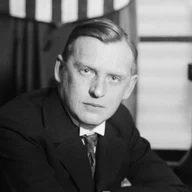
▶ Videos about Alexander Alekhine on ChessTube (7)
Beginnings
Born in Moscow on 31 October 1892. He was taught to play at home: by his mother, his elder brother Alexei and his sister Varvara. His first documented game comes from a correspondence tournament begun on 3 December 1902: he was ten.
In 1911 he entered the Imperial School of Law in St Petersburg.
Date, place, family and first game: article Alexander Alekhine, English Wikipedia; dates confirmed on Wikidata (Q131374).The 1920s: the blindfold records
He played simultaneous displays without seeing the boards, and the number of opponents grew: 26 in New York on 27 April 1924, 28 in Paris on 1 February 1925.
In 1924 he applied for French citizenship and enrolled for a doctorate at the Sorbonne law faculty. Through the 1930s everyone called him “Dr Alekhine”, but no certificate for the degree exists.
Blindfold records, citizenship and doctorate: article Alexander Alekhine, English Wikipedia, which notes the missing certificate.1927: he beats Capablanca
From 16 September to 29 November 1927, in Buenos Aires, he beat José Raúl Capablanca: six wins, three losses and twenty-five draws. It was the longest world championship match until 1984.
Capablanca never got a return match. Alekhine demanded the same financial terms Capablanca had once imposed himself: a ten-thousand-dollar stake, with the larger share to the defending champion.
Dates, score and the rematch question: article Alexander Alekhine, English Wikipedia.San Remo and Bled
At San Remo 1930 he won with thirteen wins and two draws, three and a half points ahead of Nimzowitsch. At Bled 1931 with fifteen wins and eleven draws, five and a half points ahead of Bogoljubov. Two of the widest margins in tournament history.
In July 1933, in Chicago, he took the blindfold record to 32 opponents.
San Remo and Bled standings and the Chicago record: article Alexander Alekhine, English Wikipedia.1935: he loses the title, 1937: he takes it back
Between October and December 1935 he lost the title to Max Euwe: nine wins for Euwe, eight for Alekhine, thirteen draws. In December 1937 he took it back, and by a clear margin: ten wins to four, with eleven draws.
The two Euwe matches: article Alexander Alekhine, English Wikipedia.The war years
During the Second World War he played in tournaments in German-occupied territories — Munich, Salzburg, Kraków, Warsaw, Prague — organised by the Nazi-controlled chess federation.
In March 1941 antisemitic articles appeared under his name in the Pariser Zeitung. Alekhine maintained that they had been written without his knowledge, or altered by the German editors, and he disavowed them more than once during and after the war. The historian Ken Whyld investigated and found nothing conclusive either way.
Tournaments in occupied territories, the Pariser Zeitung articles, the disavowals and Ken Whyld’s investigation: article Alexander Alekhine, English Wikipedia.gm_x9nNJ6SowOXh: scacchiera giocabile, con la partita completa sotto.
gm_UZPwrSWdzuvZ: scacchiera giocabile, con la partita completa sotto.
gm_ApxpqyKBPR8T: scacchiera giocabile, con la partita completa sotto.
gm_RETzGsvkkJaN: scacchiera giocabile, con la partita completa sotto.
gm_fNrQuE6K2uRe: scacchiera giocabile, con la partita completa sotto.
The end
He died in Estoril, Portugal, on 24 March 1946, aged fifty-three. He is the only world champion to die while still champion.
The official cause was cardiac. A witness to the autopsy, however, wrote to Chess Life that he had choked on an unchewed piece of meat found in his airway. The doctor present, Antonio J. Ferreira, stated that there was no evidence of foul play.
Date, place and the two accounts of the cause of death: article Alexander Alekhine, English Wikipedia.gm_KNZK_YX38ToH: scacchiera giocabile, con la partita completa sotto.
gm_-fUN-yqYif2P: scacchiera giocabile, con la partita completa sotto.
gm_2OI-XfgU67rZ: scacchiera giocabile, con la partita completa sotto.
How he is described
What is documented in his own words is an idea of discipline: “I study chess eight hours a day, on principle.”
The sentence he is best known for is another: “During a chess competition a chess master should be a combination of a beast of prey and a monk.” We give it for what it is — commonly attributed to him, with no contemporary source. Edward Winter, who checks chess quotations, writes that for Alekhine no primary source exists; it circulates from a 1998 compilation that gives no sources. If one turns up, we will write it here.
“I study chess eight hours a day”: The Oxford Companion to Chess, Hooper and Whyld, 1996, p. 8. On the absence of a primary source for the other sentence: Edward Winter’s pages, chesshistory.com.In the round-robins, and at the Olympiads
Alekhine is remembered for his matches, but his strength is better measured over round-robin tournaments. Between 1921 and 1927 he won or shared first prize in about two thirds of the many events he entered. The exceptions show the standard of the field: at Vienna 1922 he tied for third behind Rubinstein and Réti, at New York 1924 he was third behind Lasker and Capablanca.
At the start of the 1930s came a run that says more than any single first prize: the first tournament in which he did not finish first was Hastings 1933-34, where he shared second place, half a point behind Salo Flohr.
Then there are the Olympiads. He played five of them for France, between 1930 and 1939: individual gold at Prague 1931 and Folkestone 1933, silver at Warsaw 1935, and a brilliancy prize at Hamburg 1930. In our own holdings those Olympiads come to 69 games: 41 won, 2 lost, 26 drawn. Of Hamburg we hold eight games, and he won all eight. The last of them, Buenos Aires 1939, ended as war began in Europe.
Over his final decade the results fall away, and the tournament tables show it at once: second behind Flohr at Poděbrady 1936, sixth at Nottingham the same year behind Capablanca, Botvinnik, Fine, Reshevsky and Euwe, and equal fourth with Euwe and Reshevsky at AVRO 1938. These are the three events where the reigning world champion finished behind the men who would challenge him.
The two thirds of first prizes between 1921 and 1927, the placings at Vienna 1922 and New York 1924, Hastings 1933-34 as the first event he closed outside first place, the five Olympiads for France with the medals and the Hamburg brilliancy prize, and the placings at Poděbrady, Nottingham and AVRO: Alexander Alekhine, English Wikipedia. The 69 games of those Olympiads with their record, and the eight wins from eight at Hamburg, are counted on our own holdings; for Hamburg 1930 our holdings are probably incomplete, which is why we say how many games we hold rather than how many he played. The first version of this count said 76 games: a 1914 simultaneous display at Stockholm had slipped in, because "Stockholm" contains the same three letters as "olm", the abbreviation archives use for the Olympiads.The games
Our archive holds 1,657 games by Alekhine, from 1906 to 1946, against more than eight hundred different opponents. The positions below come from those games.
Games from PGN Mentor. The moves of a chess game are a fact, not a copyrighted work.Frequently asked questions
Where do Alexander Alekhine's positions come from?
From his real games. Every position is a moment in a game Alexander Alekhine actually played: above the board you can see both players, the tournament and the year. The best move is identified by Stockfish, analysing the position.
Why is the board covered?
So the solution is not given away to anyone scrolling the page. The first two ranks stay readable and the rest is veiled: the whole position appears when you open the puzzle.
Do I need an account to solve Alexander Alekhine's puzzles?
Yes. The puzzle is played on the training page, where the result counts towards that puzzle's leaderboard and moves the player's Elo rating. Without an account there is no rating to update.
Did Alexander Alekhine win all these positions?
No. Some come from games he lost, and in those the move to find belongs to his opponent. The box says so next to the board, before you open the puzzle.
What happens after solving or missing one of Alexander Alekhine's puzzles?
That puzzle's leaderboard appears, along with two ways on: leave, which brings you back to this page, or keep playing, which offers another position taken from Alexander Alekhine's games.
Can you see the whole game after the puzzle?
Yes. Once the puzzle is over, every move of that game appears, and they are clickable: tap one and the position goes onto the board while <b>Stockfish 18</b> analyses it on the spot, in your browser, showing the best lines. You can move back and forth through the whole game.
How many Alexander Alekhine positions are there?
At the moment 8. The number grows on its own: a program works through the archive of his games and adds new positions whenever it finds them.
Who wrote the biographical notes?
We wrote them ourselves. The at-a-glance data — dates, places, titles — comes from Wikidata and Wikipedia, under the licence stated below the panel.