Anatoly Karpov
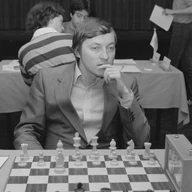
▶ Videos about Anatoly Karpov on ChessTube (10)
Beginnings
Born in Zlatoust, in the Urals, on 23 May 1951. At twelve he joined Mikhail Botvinnik’s school, although Botvinnik did not at first think much of him. In Leningrad he was coached by Semyon Furman, and it was Furman who formed him.
He studied mathematics in Moscow, then moved to Leningrad and graduated in economics.
Date, place, Botvinnik, Furman and his studies: article Anatoly Karpov, English Wikipedia; dates confirmed on Wikidata (Q131674).The climb
Between 1969 and 1974 he climbed the whole ladder: he won the world junior championship and reached the Candidates final, which gave him the right to challenge the world champion.
Article Anatoly Karpov, English Wikipedia.1975: champion without playing
The challenger was him, the champion was Bobby Fischer. The match was never played: Fischer would not accept the conditions, and on 3 April 1975 FIDE president Max Euwe declared that he had forfeited the title and that Karpov was the new world champion. He is the twelfth in history, and the only one to become champion without moving a pawn.
What he did afterwards is further down this page.
Euwe’s declaration of 3 April 1975: article Anatoly Karpov, English Wikipedia.The two defences against Korchnoi
In 1978, in Baguio in the Philippines, he defended the title against Viktor Korchnoi: six wins to five, with twenty-one draws. A very long match, decided at the very end.
In 1981, in Merano, he beat him again by a far wider margin: six to two, with ten draws.
Scores and venues of both matches: article Anatoly Karpov, English Wikipedia.1984–1990: the five Kasparov matches
The first match, begun in 1984, never finished. Karpov was ahead 5–3 with twenty draws when FIDE president Florencio Campomanes stopped it on his own initiative, saying the health of both players was at risk. Karpov had lost ten kilos.
They played again in 1985, in Moscow, and Karpov lost the title 13–11. In 1986 he lost the return 12½–11½. In 1987, in Seville, the match ended 12–12: on a tied score the champion keeps the title, so Kasparov kept it. In 1990, the last of the five, 12½–11½ for Kasparov again.
In all, 144 games between them: 19 wins for Karpov, 21 for Kasparov, 104 draws. No two players have ever been closer.
The five matches, the 1985 stoppage and the total of 144 games: article Anatoly Karpov, English Wikipedia.1993–1999: the FIDE title
When Kasparov split from FIDE, the title split in two. Karpov won the FIDE title in 1993 and held it until 1999, defending it in 1996 and 1998. His highest rating, 2780, is from July 1994: he was forty-three.
FIDE title and peak rating: article Anatoly Karpov, English Wikipedia.gm__cJa6HA6_10p: scacchiera giocabile, con la partita completa sotto.
The years after
He has more than a hundred and sixty first places in tournaments, more than any other player. Since 2006 he has chaired a commission on ecological safety, and since 2011 he has been a member of the Duma.
Tournament first places and political activity: article Anatoly Karpov, English Wikipedia.gm_odLXfI33dMOd: scacchiera giocabile, con la partita completa sotto.
gm_oVMJPj3FIPzF: scacchiera giocabile, con la partita completa sotto.
gm_9pHenj8XqBo9: scacchiera giocabile, con la partita completa sotto.
gm_Mx3w1s0Kofqt: scacchiera giocabile, con la partita completa sotto.
gm_YQQWUZ2za2q_: scacchiera giocabile, con la partita completa sotto.
gm_bYSe8C88Yew6: scacchiera giocabile, con la partita completa sotto.
gm_Tz_9TEFpBZ7x: scacchiera giocabile, con la partita completa sotto.
How he is described
They called him “the boa constrictor”: positional play, risk cut to a minimum, and a grip that closes move after move without one being able to see the moment the opponent is lost. For this he is often compared to José Raúl Capablanca.
About himself and the game he wrote a sentence that works as a definition: “Chess is everything: art, science and sport.”
His style and the comparison with Capablanca: article Anatoly Karpov, English Wikipedia. The sentence is his own, from his autobiography Chess is My Life, Pergamon Press 1980, p. 14 (translated by Ken Neat).A hundred and sixty first places
Karpov is the greatest tournament player in our archive: his encyclopedia entry credits him with over 160 first-place finishes. It began early: in 1969, aged eighteen, he won the World Junior Championship at Stockholm with 10 out of 11, undefeated.
The result he is remembered for is Linares 1994: 11 out of 13, two and a half points ahead of Kasparov and Shirov. In our holdings that is thirteen games with nine wins, no defeats and four draws: the score agrees, and so does the fact that he lost nothing. The other high mark is Las Palmas 1977, 13½ out of 15, which for us comes to twelve wins, no defeats and three draws.
Then there is the consistency, which makes no headlines but wins events: Tilburg five times (1977, 1979, 1980, 1982, 1983), Bugojno three (1978 shared, 1980, 1986), the Soviet Championship three (1976, 1983 and 1988, the last of them without a defeat).
At the Olympiads he played six times for the Soviet Union — 1972, 1974, 1980, 1982, 1986, 1988 — and the team took gold all six. Out of 68 Olympiad games he lost two: in our holdings those editions are 67 games, and the defeats are exactly two. Of the 141 events of at least nine games we credit him with, 47 ended without a defeat: more than any other champion on these pages.
The over-160 first places, the 1969 world junior title with its score, Linares 1994 with its margin and the names of the runners-up, Las Palmas 1977, the five Tilburg wins and the three at Bugojno, the three Soviet Championships and the six Olympiads with team gold and only two defeats in 68 games: Anatoly Karpov, English Wikipedia. The records for Linares 1994, Las Palmas 1977 and the 1988 Soviet Championship, the 67 Olympiad games and the count of 47 events out of 141 without a defeat are counted on our own holdings; the criterion for the 47 is: events of at least nine games, excluding matches, simultaneous displays, blitz and rapid, and the comparison with other champions is made across the pages published here. Of the 68 Olympiad games the entry credits him with, we hold one fewer.The games
Our archive holds 3,527 games by Karpov, from 1961 to 2022, against more than eight hundred different opponents. The positions below come from those games.
Games from PGN Mentor. The moves of a chess game are a fact, not a copyrighted work.Frequently asked questions
Where do Anatoly Karpov's positions come from?
From his real games. Every position is a moment in a game Anatoly Karpov actually played: above the board you can see both players, the tournament and the year. The best move is identified by Stockfish, analysing the position.
Why is the board covered?
So the solution is not given away to anyone scrolling the page. The first two ranks stay readable and the rest is veiled: the whole position appears when you open the puzzle.
Do I need an account to solve Anatoly Karpov's puzzles?
Yes. The puzzle is played on the training page, where the result counts towards that puzzle's leaderboard and moves the player's Elo rating. Without an account there is no rating to update.
Did Anatoly Karpov win all these positions?
No. Some come from games he lost, and in those the move to find belongs to his opponent. The box says so next to the board, before you open the puzzle.
What happens after solving or missing one of Anatoly Karpov's puzzles?
That puzzle's leaderboard appears, along with two ways on: leave, which brings you back to this page, or keep playing, which offers another position taken from Anatoly Karpov's games.
Can you see the whole game after the puzzle?
Yes. Once the puzzle is over, every move of that game appears, and they are clickable: tap one and the position goes onto the board while <b>Stockfish 18</b> analyses it on the spot, in your browser, showing the best lines. You can move back and forth through the whole game.
How many Anatoly Karpov positions are there?
At the moment 8. The number grows on its own: a program works through the archive of his games and adds new positions whenever it finds them.
Who wrote the biographical notes?
We wrote them ourselves. The at-a-glance data — dates, places, titles — comes from Wikidata and Wikipedia, under the licence stated below the panel.