José Raúl Capablanca
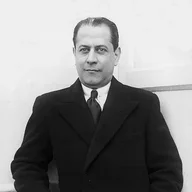
▶ Videos about José Raúl Capablanca on ChessTube (23)
Beginnings
Born in Havana on 19 November 1888, the second surviving son of José María Capablanca, an officer in the Spanish army, and Matilde María Graupera y Marín, from Catalonia.
By his own account he learned at four, with nobody teaching him, by watching his father play with friends. One day he noticed his father make an illegal move, pointed it out, and then beat him.
At eight he was taken to the Havana Chess Club. A doctor advised that he should not be allowed to play too often.
Family, his account of how he learned and the doctor’s advice: José Raúl Capablanca, English Wikipedia.The boy from Havana
In November 1901, two days before his thirteenth birthday, he narrowly won a match against Juan Corzo, the champion of Cuba. The following year, at the national championship, he finished fourth of six and lost both his games against him.
In 1905 he passed the entrance exams for Columbia, in New York, where he played shortstop on the freshman baseball team. That same year he joined the Manhattan Chess Club, and was soon its strongest player. In 1908 he left university to concentrate on chess.
In 1909 he toured the United States giving simultaneous exhibitions and won 96.4 per cent of the games. Then he played Frank Marshall, the US champion at the time, and beat him 15–8: eight wins, a single loss, fourteen draws. Capablanca was twenty and nobody yet.
The Corzo match, the 1902 championship, Columbia, the Manhattan Chess Club, the simultaneous tour and the Marshall match: José Raúl Capablanca, English Wikipedia.1911: San Sebastián
Invited to a tournament reserved for the best in the world — some protested, because he had no record to speak of — he finished first with six wins, one loss and seven draws, ahead of Rubinstein, Vidmar, Marshall, Schlechter and Tarrasch. From then on he was a contender for the title.
In September 1913 the Cuban Foreign Office gave him a post. It came with no specific duties: Hooper and Whyld write that he was a kind of “ambassador-at-large”. But it gave him what chess had not, financial security.
The San Sebastián tournament and the Foreign Office post, with Hooper and Whyld’s description: José Raúl Capablanca, English Wikipedia.1921: world champion
The road went through St Petersburg, 1914: he finished second with 13 out of 18, half a point behind Lasker, ahead of Alekhine, Tarrasch and Marshall.
In Havana, between 15 March and 21 April 1921, he faced Emanuel Lasker, who had held the title for twenty-seven years. The score says it all: four wins, no losses, ten draws. Lasker resigned the match after the fourteenth game.
It sits at the centre of a run with no equal: between 10 February 1916 and 21 March 1924 he played 63 games without losing one — forty won, twenty-three drawn. Eight years.
In December 1921 he married Gloria Simoni Betancourt. They had two children, José Raúl in 1923 and Gloria in 1925.
St Petersburg 1914, dates and score of the match, the unbeaten run and the marriage: José Raúl Capablanca, English Wikipedia.In those years he was called “the chess machine”, for the air of invincibility he carried, and “the Mozart of chess”, for how early it had all come to him.
Nicknames: José Raúl Capablanca, Spanish Wikipedia; “Human Chess Machine” also in the World Chess Hall of Fame profile.1927: Buenos Aires
As champion he won London 1922 with 13 out of 15, unbeaten, ahead of Alekhine. There he proposed rules for future title matches — the “London Rules”: the first to six wins takes the match, and the champion must accept a challenge within a year — signed by, among others, Alekhine, Bogoljubov, Réti, Rubinstein and Tartakower.
In 1925 he said in an interview that chess was in danger of being played out, and proposed a variant on a board ten files by eight, with two new pieces: one moving like a rook and a knight, one like a bishop and a knight. That, he thought, would keep technique at bay “for at least a few centuries”. The same year he appeared in the Soviet film Shakhmatnaya goryachka, “Chess Fever”, playing himself.
In February 1927 he won the New York tournament without losing a game, 14 out of 20, two and a half points clear of the runner-up: Alexander Alekhine. Seven months later, in Buenos Aires, he lost the title to him — 6–3 with twenty-five draws, the longest world championship match played until then.
The return match never happened. Negotiations dragged on for years and broke down every time.
London 1922 and its rules, the variant, the film, New York 1927 and the Buenos Aires match: José Raúl Capablanca, English Wikipedia.The books
He wrote three. Chess Fundamentals (1921) is the one that has lasted best: Mikhail Botvinnik called it the best chess book ever written. The other two are My Chess Career (1920) and A Primer of Chess (1935).
Botvinnik’s verdict as reported in José Raúl Capablanca, English Wikipedia. This page gives the titles of the books, not their contents.The last years
Without the title he remained one of the strongest players in the world. In 1936 he shared first place at Nottingham with Mikhail Botvinnik and won Moscow a point ahead of him. At AVRO, in 1938, he finished seventh of eight. At the Buenos Aires Olympiad of 1939 he won the gold medal for the best result on top board.
On 7 March 1942 he collapsed at the Manhattan Chess Club, shortly after asking for help taking off his coat: the same club he had joined at sixteen. He died the next morning, 8 March, at Mount Sinai Hospital, aged fifty-three, of a cerebral haemorrhage brought on by high blood pressure. The funeral was held in Havana, on 15 March, at the Colón Cemetery.
Emanuel Lasker, the man he had taken the title from, said of him: “I have known many chess players, but only one chess genius: Capablanca.”
Tournaments from 1936 to 1939, death, funeral and Lasker’s verdict: José Raúl Capablanca, English Wikipedia.gm_MLntJlNQgCZU: scacchiera giocabile, con la partita completa sotto.
gm_TCt8iRuBSyGb: scacchiera giocabile, con la partita completa sotto.
gm_j6TEf3iIlqx3: scacchiera giocabile, con la partita completa sotto.
gm_gaxNgfJmh-3s: scacchiera giocabile, con la partita completa sotto.
gm_Ukpo_6pMsYhp: scacchiera giocabile, con la partita completa sotto.
gm_MJie_6d_LZGp: scacchiera giocabile, con la partita completa sotto.
gm_xfZrXIvjXZr-: scacchiera giocabile, con la partita completa sotto.
How often he lost, and where
Capablanca is said to have hardly ever lost, and that is worth measuring. Our holdings contain 600 of his games and 44 defeats: one in fourteen. Six of those forty-four came in simultaneous displays and exhibitions, where he faced dozens of people at once; that leaves 38 in real competition. Of these, three belong to the 1901 match with Juan Corzo, when he was twelve. Thirty-five remain from his adult career, and his encyclopedia entry counts thirty-four "serious" ones: the difference of one sits inside the margin of what counts as serious.
More telling is who managed to inflict them. Seven of the forty-four bear the name of Alexander Alekhine, and six of those seven come from the Buenos Aires match. The others who did it more than once are Corzo (three), Frank Marshall, Rudolf Spielmann and Emanuel Lasker (two each). The rest of the world, over thirty years, beat him once or never.
On the other side there are the whole years without a single defeat: in our holdings there are seven, counting only years with at least ten games — 1915, 1918, 1921, 1922, 1926, 1931 and 1939. The fullest two are 1931, with twenty-two games, and 1939, with twenty-five, the year of the Buenos Aires Olympiad.
In round-robin play his worst results are not collapses but second places: second at New York 1924 with 14½ out of 20, a point and a half behind Lasker, and third at Moscow 1925, two points behind Bogoljubow. At Barcelona 1929, in the fourteen games we hold, thirteen wins and one draw.
The thirty-four "serious" games lost as an adult, the second place at New York 1924 with its score and margin, and the third at Moscow 1925 with its margins: José Raúl Capablanca, English Wikipedia. The count of 44 defeats in 600 games, their split between simultaneous displays and competition, the names of those who beat him and how often, the seven years without a defeat and the Barcelona 1929 record are counted on our own holdings. Our number is higher than the entry's because our holdings also include simultaneous displays and exhibitions, which are not "serious", and the 1901 Corzo match, which is not from his adult career. For the undefeated years the criterion is: at least ten dated games in that year.The games
The archive holds 600 of his games, from 1901 to 1941. The positions appear in the sections for the years they belong to, as the engine analyses them.
Frequently asked questions
Where do José Raúl Capablanca's positions come from?
From his real games. Every position is a moment in a game José Raúl Capablanca actually played: above the board you can see both players, the tournament and the year. The best move is identified by Stockfish, analysing the position.
Why is the board covered?
So the solution is not given away to anyone scrolling the page. The first two ranks stay readable and the rest is veiled: the whole position appears when you open the puzzle.
Do I need an account to solve José Raúl Capablanca's puzzles?
Yes. The puzzle is played on the training page, where the result counts towards that puzzle's leaderboard and moves the player's Elo rating. Without an account there is no rating to update.
Did José Raúl Capablanca win all these positions?
No. Some come from games he lost, and in those the move to find belongs to his opponent. The box says so next to the board, before you open the puzzle.
What happens after solving or missing one of José Raúl Capablanca's puzzles?
That puzzle's leaderboard appears, along with two ways on: leave, which brings you back to this page, or keep playing, which offers another position taken from José Raúl Capablanca's games.
Can you see the whole game after the puzzle?
Yes. Once the puzzle is over, every move of that game appears, and they are clickable: tap one and the position goes onto the board while <b>Stockfish 18</b> analyses it on the spot, in your browser, showing the best lines. You can move back and forth through the whole game.
How many José Raúl Capablanca positions are there?
At the moment 7. The number grows on its own: a program works through the archive of his games and adds new positions whenever it finds them.
Who wrote the biographical notes?
We wrote them ourselves. The at-a-glance data — dates, places, titles — comes from Wikidata and Wikipedia, under the licence stated below the panel.