Mikhail Tal
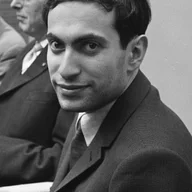
▶ Videos about Mikhail Tal on ChessTube (28)
Beginnings
Born in Riga on 9 November 1936. He had a congenital deformity of his right hand — some fingers missing — and that did not stop him becoming a good pianist.
First steps at the board
As a boy he joined the chess club of the Riga Palace of Young Pioneers. In 1949, aged thirteen, he beat master Ratmir Kholmov in a simultaneous display. In the archive his games begin exactly there.
gm_Q4AVXiog2v1M: scacchiera giocabile, con la partita completa sotto.
gm_G5HPGkD-aJef: scacchiera giocabile, con la partita completa sotto.
gm_x8UOJWnZGT1_: scacchiera giocabile, con la partita completa sotto.
gm_hg3uM4MOQha7: scacchiera giocabile, con la partita completa sotto.
gm_CQ7cvWiEcFHL: scacchiera giocabile, con la partita completa sotto.
gm_IUMU4qEERFRs: scacchiera giocabile, con la partita completa sotto.
1954: Master of Sport
His first title came at eighteen.
gm_at3qoTT-U-k0: scacchiera giocabile, con la partita completa sotto.
gm_G6_oV3_fq3hG: scacchiera giocabile, con la partita completa sotto.
gm_V9r4aeWuutYU: scacchiera giocabile, con la partita completa sotto.
gm_D5M0amkN9VsC: scacchiera giocabile, con la partita completa sotto.
gm_W_tZNRqDsDuH: scacchiera giocabile, con la partita completa sotto.
gm_FQb7uket2Rke: scacchiera giocabile, con la partita completa sotto.
gm_reYDSFBTscHb: scacchiera giocabile, con la partita completa sotto.
1957–1958: the Soviet championship and the Grandmaster title
In 1957 he won the USSR championship with 14 points out of 21: at twenty he was the youngest ever to do so. FIDE waived the usual requirements and awarded him the Grandmaster title for that result alone. The following year he won it again, 12 out of 19.
Scores of both championships and FIDE's waiver: Mikhail Tal, English Wikipedia.gm_w9NIcMqS37ux: scacchiera giocabile, con la partita completa sotto.
gm_SDPMyR7nO0rm: scacchiera giocabile, con la partita completa sotto.
gm_vXaqxcpBdlA4: scacchiera giocabile, con la partita completa sotto.
gm_o6X35qPnbXKs: scacchiera giocabile, con la partita completa sotto.
gm_N0fWm1mhHNK_: scacchiera giocabile, con la partita completa sotto.
gm_4afpy80OoR65: scacchiera giocabile, con la partita completa sotto.
gm_Oq2CRhxSmiTk: scacchiera giocabile, con la partita completa sotto.
gm_pSrQrFo4OaDY: scacchiera giocabile, con la partita completa sotto.
gm_JKsRyF_b4XlD: scacchiera giocabile, con la partita completa sotto.
gm_pmQabfUjfJrl: scacchiera giocabile, con la partita completa sotto.
gm_EsIgeC_Bmwb0: scacchiera giocabile, con la partita completa sotto.
gm_9fcX38uhjulS: scacchiera giocabile, con la partita completa sotto.
gm_feTnfzxmbHta: scacchiera giocabile, con la partita completa sotto.
1960: world champion at twenty-three
In Moscow he beat Mikhail Botvinnik 12½–8½: six wins, two losses, thirteen draws. He was twenty-three, the youngest world champion there had ever been — a record that stood for twenty-five years, until Kasparov.
Dates, score and age: Mikhail Tal, English Wikipedia.To everyone he was “the Magician from Riga”: the nickname came from his play, aggressive and built on very long calculation. To his friends he was simply Misha, the diminutive of Mikhail.
The two nicknames and where they came from: Mikhail Tal, English Wikipedia.gm_b_TCSJoBBr-P: scacchiera giocabile, con la partita completa sotto.
gm_vJIdZ19Sn-Nu: scacchiera giocabile, con la partita completa sotto.
gm_TSfap3NaEEZV: scacchiera giocabile, con la partita completa sotto.
gm_jcXijcMq9pLL: scacchiera giocabile, con la partita completa sotto.
gm_IP619LnEc5tJ: scacchiera giocabile, con la partita completa sotto.
gm_AXivEmHCoWsd: scacchiera giocabile, con la partita completa sotto.
gm_fIC4kpLhoaPH: scacchiera giocabile, con la partita completa sotto.
gm_K5TamAy5COIB: scacchiera giocabile, con la partita completa sotto.
gm_YZCob_3opl37: scacchiera giocabile, con la partita completa sotto.
gm_Fd-ZnQOguQda: scacchiera giocabile, con la partita completa sotto.
gm_cybH4vyM2b46: scacchiera giocabile, con la partita completa sotto.
gm_Goxj8iaJC7NO: scacchiera giocabile, con la partita completa sotto.
gm_GcB7-MtVZykD: scacchiera giocabile, con la partita completa sotto.
gm_d1YOGL5tmuZy: scacchiera giocabile, con la partita completa sotto.
1961: the rematch lost
The rules of the time gave the defeated champion the right to an immediate rematch, and Botvinnik took it. The following year, again in Moscow, he won 13–8. Tal played badly and was unwell: the kidney trouble that stayed with him all his life weighed on that match.
Score of the rematch and his state of health: Mikhail Tal, English Wikipedia.gm_BzNizLZTrk08: scacchiera giocabile, con la partita completa sotto.
gm_mociKpgcjSYO: scacchiera giocabile, con la partita completa sotto.
gm_mqQUwLJoI4nJ: scacchiera giocabile, con la partita completa sotto.
gm_pmAeuwVDlP3b: scacchiera giocabile, con la partita completa sotto.
gm_ps1kxM532FNV: scacchiera giocabile, con la partita completa sotto.
gm_INvyR5O-D0VL: scacchiera giocabile, con la partita completa sotto.
gm_IWM4OwyadRUk: scacchiera giocabile, con la partita completa sotto.
gm_6jYQLsKP0Nkr: scacchiera giocabile, con la partita completa sotto.
Health, which decided a great deal
Kidney disease is the dark thread running through his life. In 1969 a kidney was removed. He went on playing for another twenty years, but more than once he withdrew from tournaments, or played them in a condition in which nobody else would have sat down at the board.
The years after
He never became world champion again, and became something else: the player everybody wanted to watch. Between 23 October 1973 and 16 October 1974 he played 95 consecutive games without losing one — 46 wins and 49 draws.
With the Soviet team he went to eight Olympiads and won all eight. His personal record: 65 wins, 34 draws, only two losses — 81.2 per cent — and seven board medals, five of them gold.
In 1988, aged fifty-one and with one kidney, he won the world blitz championship at Saint John in Canada, ahead of Kasparov and Karpov. In the final he beat Rafael Vaganian 3½–½.
The unbeaten run, the Olympiad record and the 1988 blitz championship: Mikhail Tal, English Wikipedia.gm_VdWrv18_cCIG: scacchiera giocabile, con la partita completa sotto.
gm_4_8d-kcTqEb0: scacchiera giocabile, con la partita completa sotto.
gm_o6GrutM7MDB-: scacchiera giocabile, con la partita completa sotto.
gm_920vf1JK-lGp: scacchiera giocabile, con la partita completa sotto.
gm_ptHCK7kxbcxu: scacchiera giocabile, con la partita completa sotto.
gm_4VOo4yAtaYuv: scacchiera giocabile, con la partita completa sotto.
gm_ESlXdjNysUQ1: scacchiera giocabile, con la partita completa sotto.
gm_mz8nXp0RijZL: scacchiera giocabile, con la partita completa sotto.
gm_i5jZN-xepl4n: scacchiera giocabile, con la partita completa sotto.
gm_uNnpFdaKK-nB: scacchiera giocabile, con la partita completa sotto.
gm_ISYyzsxxGnwp: scacchiera giocabile, con la partita completa sotto.
gm_DvExfsz36za3: scacchiera giocabile, con la partita completa sotto.
gm_ir2t9r2EIo8p: scacchiera giocabile, con la partita completa sotto.
gm_1q5b5r2tQGpJ: scacchiera giocabile, con la partita completa sotto.
gm_7fWwthQj71IS: scacchiera giocabile, con la partita completa sotto.
The end
He died in Moscow on 28 June 1992, aged fifty-five. The official cause was an oesophageal haemorrhage. His friend Gennadi Sosonko wrote that by then his whole organism had stopped working.
Date and cause of death: Mikhail Tal, English Wikipedia.How his contemporaries saw him
Three judgements in order of date, each with its source. None of the three is hagiographic: Botvinnik, in the same interview, admires him and accuses him of laziness.
- Grigory Levenfish, 1956 — on the USSR championship
- He calls him
the most colourful figure of the championship
, agreat talent
who seekssharp and complicated play
. Tal is twenty and not yet champion of anything. Quoted by Garry Kasparov, My Great Predecessors, Part II, 2003, p. 383. - C.J.S. Purdy, May 1960 — on the eve of the match with Botvinnik
- He writes that Tal
sees the mostest the fastest of all
, that perhaps only Petrosian is his equal there, but that Talwill often choose the incalculable
: a player like that develops an intuition for chances. On that basis he predicted Tal's victory, against the general view. Chess World, May 1960, p. 73. - Mikhail Botvinnik, 1962 — after taking the title back from him
- The most useful judgement, because it comes from the man who had studied him in order to beat him. When the game takes on an open character, he says,
nobody can equal Tal
, and the report that he calculates variations very quicklyis really so
. But in other kinds of position he finds him weaker, and thereone can play him entirely peacefully
. Then the reproach: one of his shortcomings is thathe is lazy
— he used to work more and prepare better, particularly in the openings. Were he well prepared, he concludes, his talent would make him far more dangerous than he is. Interview with the Latvian magazine Šahs, reprinted in Chess Life, June 1962, p. 135.
Two famous sentences are missing here, and not by oversight. Smyslov dismissing his play as «tricks» appears in many books, but nobody says where it comes from. And «there are two types of sacrifices: correct ones and mine» — the most famous of all — can only be traced back to a mention in 1973 saying that Tal «once» said it: no original, no date. You will find them among the quotations on the home page, where they are marked as attributed.
The books he wrote
The Life and Games of Mikhail Tal is his autobiography, and the hippopotamus comes from there. One curiosity: the co-author of Study Chess with Tal is Alexander Koblencs, the trainer at the Riga Palace of Young Pioneers.
- Tal–Botvinnik, 1960 — his account of the twenty-one games of the world championship match. Russell Enterprises, 2001 (orig. 1970).
- World Championship: Petrosian vs. Spassky 1966 — Chess Digest, 1973.
- Learn from the Grandmasters (edited by Raymond Keene) — his are the chapters «The Score Isn't Everything» and «Victory in the Ending». Batsford, 2003 (orig. 1975).
- The Life and Games of Mikhail Tal — the autobiography. Everyman Chess, 1997 (orig. 1978).
- Study Chess with Tal, with Alexander Koblencs — Batsford, 2013 (orig. 1978).
- Tal's Winning Chess Combinations, with Viktor Khenkin — Simon and Schuster, 1979.
- Montreal 1979: Tournament of Stars, with Aleksandr Roshal and V. Chepizhny — Pergamon Press, 1980.
- Chess Scandals: The 1978 World Chess Championship, with E.B. Edmondson — Pergamon Press, 1981.
- The World Champions Teach Chess (edited by Yakov Estrin and Isaac Romanov) — his is the chapter «The chess calculator's confession». A & C Black, 1988.
- Attack with Mikhail Tal, with Iakov Damsky — Everyman Chess, 1994.
Bibliographical data (titles, years, publishers, co-authors) from Mikhail Tal, English Wikipedia. Titles and edition data are facts: of these books this page reproduces no content.
The hippopotamus
It is the anecdote he tells himself in his autobiography, and it is the reason this page exists. During a game against Vasiukov he faced a knight sacrifice he could not calculate to the end. While he was thinking, a children's rhyme about a hippopotamus that had fallen into a marsh came into his head, and he could not get rid of it: he began wondering how one would pull the animal out, with a crane, with levers. Half an hour went by like that. Then the hippopotamus, he writes, «climbed out of the marsh by itself» — and he played the sacrifice, which turned out to be sound.
From his autobiography, The Life and Games of Mikhail Tal. The longer version is among the quotations on the home page.Six Soviet titles, and sixty-eight first places
The USSR championship was the hardest tournament in the world, and he won it six times: besides the two of his early twenties, in 1967, 1972, 1974 and 1978. In the whole history of that competition nobody has won more.
The overall count is larger still: between 1950 and 1991 he closed in first place, alone or shared, on sixty-eight occasions.
The two engagements that brought him face to face with Botvinnik he won outright: the Portorož interzonal, in 1958, with 13½ out of 20, and the Candidates Tournament the following year — played across Bled, Zagreb and Belgrade — with 20 points out of 28, a point and a half ahead of Paul Keres, who finished on 18½.
And the unbeaten run described further up was not the first. In the months immediately before, from July 1972 to April 1973, he had already assembled one of 86 encounters: forty-seven won and thirty-nine halved. The two runs, back to back, cover two and a half years of the calendar. The longer record stood for over forty years: Ding Liren passed it in 2018, reaching a hundred.
On all this our own holdings can say little, and it is worth admitting: of the 203 games we possess, those played between 1972 and 1974 number seven, and none is a loss. Too few to confirm a record; enough not to contradict one.
The six Soviet titles with their years, the sixty-eight first places between 1950 and 1991, the Portorož interzonal of 1958 and the 1959 Candidates Tournament with the scores and the margin over Keres, the run of 86 encounters with its dates and figures, and the record passed by Ding Liren in 2018: Mikhail Tal, English Wikipedia. The seven games of 1972-1974 present in our holdings, and the fact that none is a loss, are counted on our own holdings.The games
The archive holds 203 of his games. Positions appear in the sections of the years they belong to.
Frequently asked questions
Where do Mikhail Tal's positions come from?
From his real games. Every position is a moment in a game Mikhail Tal actually played: above the board you can see both players, the tournament and the year. The best move is identified by Stockfish, analysing the position.
Why is the board covered?
So the solution is not given away to anyone scrolling the page. The first two ranks stay readable and the rest is veiled: the whole position appears when you open the puzzle.
Do I need an account to solve Mikhail Tal's puzzles?
Yes. The puzzle is played on the training page, where the result counts towards that puzzle's leaderboard and moves the player's Elo rating. Without an account there is no rating to update.
Did Mikhail Tal win all these positions?
No. Some come from games he lost, and in those the move to find belongs to his opponent. The box says so next to the board, before you open the puzzle.
What happens after solving or missing one of Mikhail Tal's puzzles?
That puzzle's leaderboard appears, along with two ways on: leave, which brings you back to this page, or keep playing, which offers another position taken from Mikhail Tal's games.
Can you see the whole game after the puzzle?
Yes. Once the puzzle is over, every move of that game appears, and they are clickable: tap one and the position goes onto the board while <b>Stockfish 18</b> analyses it on the spot, in your browser, showing the best lines. You can move back and forth through the whole game.
How many Mikhail Tal positions are there?
At the moment 63. The number grows on its own: a program works through the archive of his games and adds new positions whenever it finds them.
Who wrote the biographical notes?
We wrote them ourselves. The at-a-glance data — dates, places, titles — comes from Wikidata and Wikipedia, under the licence stated below the panel.