Xie Jun
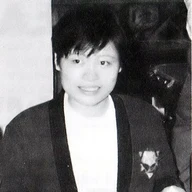
Origins
Born in Baoding, in Hebei, on 30 October 1970; she grew up in Beijing, and the family comes from Liaoyuan, in Jilin. Her first game was not chess: it was xiangqi, Chinese chess, which she learned from 1975. At ten she was Beijing girls' xiangqi champion.
In 1980 she moved to international chess. In 1984 she was Chinese girls' champion.
Date, place, family origin and the move from xiangqi: Xie Jun on English Wikipedia and 谢军 (棋手) on Chinese Wikipedia; dates confirmed on Wikidata (Q255142). The two articles differ by a year on the beginning — the Chinese one gives 1975 for xiangqi and 1980 for chess, the English one says "at six" and "at ten": the same story told differently.The national squad
In 1986 she entered the Chinese national squad. In 1988 she became Woman International Master. The oldest game we have of hers is from that year.
National squad and the 1988 title: 谢军 (棋手), Chinese Wikipedia. 1988 is the date of her oldest game in our archive.1991: the world title
In 1991, at twenty-one, she challenged the world champion Maia Chiburdanidze, who had held the title since 1978, and beat her: eight and a half to six and a half, with four wins, two losses and nine draws.
It was not only a title. Until then the women's world championship had always belonged to European and Soviet players, from Vera Menchik onwards. Xie Jun is the first non-European women's world chess champion.
Score of the match: recounted on the fifteen games in our archive, and it agrees with the published one. That the women's title had until then been a European monopoly: 谢军 (棋手), Chinese Wikipedia, and the list of previous champions.Grandmaster
She became a Grandmaster — the full title, not the women's one — and was the sixth woman in the world to earn it, the first Asian. The sources disagree on the year: the Chinese article says 1993, the English one the summer of 1994. We are not choosing for you: we write it as it stands.
In 1993 she defended the world title against Nana Ioseliani and the match was never in doubt: eight and a half to two and a half, seven wins and a single loss.
The Grandmaster title and the disagreement over the year: 谢军 (棋手), Chinese Wikipedia (1993), and Xie Jun, English Wikipedia (summer 1994), which adds "first Asian woman". Score of the Ioseliani match: recounted on the eleven games in our archive.1996: the title lost
In 1996 she lost the title to Zsuzsa Polgar, the eldest of the three Hungarian sisters: four and a half to eight and a half. It is her heaviest defeat in a match.
Score: recounted on the thirteen games in our archive, and it agrees with the published one.The title regained
In 1999 she took the title back, beating Alisa Galliamova eight and a half to six and a half — the same score by which she had first won it. The match was played because Zsuzsa Polgar did not turn up to defend.
In 2000 she defended it again, in the new knockout format, against her compatriot Qin Kanying: two and a half to one and a half. She remained world champion until 2001.
Galliamova: score recounted on the fifteen games in our archive. For the Qin Kanying match we give the published score and not ours: our archive holds five of their games from that year, but from two different events mixed together (FIDE WCh Women KO and Sufe Cup), so our count is not the match's. Polgar's default: Xie Jun, English Wikipedia.The last playing years
She went on playing right through the 2000s. Her highest Elo rating, 2574, she reached in January 2008, at thirty-seven — after the end of the games we hold in the archive. She led the Chinese women's team at the Chess Olympiads several times, and won them.
Peak Elo and the date: Xie Jun, English Wikipedia. Olympiads with the national team: 谢军 (棋手), Chinese Wikipedia.gm_r_iBagb9Y0sM: scacchiera giocabile, con la partita completa sotto.
gm_cUQFvND4pG0M: scacchiera giocabile, con la partita completa sotto.
gm_wN7leE3xCCHG: scacchiera giocabile, con la partita completa sotto.
gm_gPNP9hgqL6NU: scacchiera giocabile, con la partita completa sotto.
gm_1sRdeam-NW3y: scacchiera giocabile, con la partita completa sotto.
gm_zB-eavP3uzln: scacchiera giocabile, con la partita completa sotto.
gm_yu01NIUhYEAG: scacchiera giocabile, con la partita completa sotto.
After the board
She took a doctorate in psychology at Beijing Normal University. In July 2004 she gained the titles of International Arbiter and FIDE Senior Trainer. She was a deputy to the eighth National People's Congress. In 2008 she directed a centre in Beijing that looks for young talent in chess and in go. Since April 2019 she has been president of the Chinese Chess Association, and in the same year she entered the World Chess Hall of Fame.
Her husband is the Singaporean Grandmaster Wu Shaobin, who had earlier been her coach.
Doctorate, the 2004 titles, the Beijing centre, the presidency and the Hall of Fame: Xie Jun, English Wikipedia. National People's Congress and the marriage: 谢军 (棋手), Chinese Wikipedia.How others describe her
Of Xie Jun we have found no quotations with a certain source: she has no Wikiquote entry in English or in Chinese, and we are not going to put into her mouth lines that circulate without an origin. If we find a documented one, we will write it here.
There is, however, a description of her play, in the Chinese Wikipedia article: an active positional player, with an opening repertoire not very broad but deeply studied, strong in the middlegame, clear and quick in her reasoning, with many small tactical resources.
One figure says more than a judgement. In our archive she played three former world champions, as an opponent and not as a guest: with Boris Spassky she is level, six and a half to six and a half over thirteen games; with Vasily Smyslov five and a half to eight and a half over fourteen; with Viktor Korchnoi four and a half to eight and a half over thirteen.
The description of her style: 谢军 (棋手), Chinese Wikipedia. The absence of quotations: checked on Wikiquote in English and in Chinese, where no entry under her name exists. The records against Spassky, Smyslov and Korchnoi are counted on the games in our archive.Eight Olympiads with China, and a knockout without a loss
The 2000 world championship was played for the first time as a straight knockout: not a long match, but a ladder of short rounds where one bad game sends you home. She climbed the whole of it without losing anything. In our holdings that event is 16 games: five won, eleven drawn, none lost, from the first round to the final.
The other part of her record that the figures tell better than words is the national team. She played eight Olympiads for China, between 1988 and 2004, and in our holdings they come to 90 games: 47 won, 33 drawn and 10 lost, 63½ points out of 90.
Her best editions sit at the start and at the end. At Novi Sad, in 1990, aged nineteen and a year before becoming world champion, she made 11 out of 14: nine wins, one loss and four halved. At Manila 1992, already champion, 10 out of 13. In the 2000 edition she finished 8½ out of 11 without losing anything.
After the title she went on winning tournaments: the most emphatic we find for her is the 2005 Torch Real Estate Cup, fifteen games with nine wins, six halved and no defeat. Among her tournaments in the archive, forty-seven run to nine games or more, and ten she closed without losing.
Every figure in this section is counted on our own holdings: the 16 games of the 2000 knockout world championship with their record, the eight Olympiads between 1988 and 2004 with their 90 games in total, the scores for Novi Sad 1990, Manila 1992 and the 2000 edition, the 2005 Torch Real Estate Cup and the count of ten tournaments out of forty-seven without a defeat, with the criterion: tournaments of at least nine games, excluding matches, simultaneous displays, blitz and rapid. That the 2000 championship was played as a knockout, and the score of her final, are described further up with their sources; here we add only the full run, round by round, that the archive lets us recount.The games
Our archive holds 701 games of Xie Jun's, from 1988 to 2007, against more than three hundred different opponents. The most recurrent are with Maia Chiburdanidze (29 games, 13½–15½), Alisa Galliamova (20, 10½–9½), Zsuzsa Polgar (15, 5½–9½) and Nana Ioseliani (14, 11–3). The positions below come from these games.
Games from PGN Mentor. Games, years and records are counted on our own archive. The opponents are "more than three hundred" and not an exact number for a precise reason: in modern tournament files the same player sometimes appears with a full first name and sometimes with just the initial (V Anand and Viswanathan Anand), and counting each one once requires a unification we have not done yet. The distinct spellings are 352, the people between 323 and 352. The moves of a game are a fact, not a protected work.Frequently asked questions
Where do Xie Jun's positions come from?
From his real games. Every position is a moment in a game Xie Jun actually played: above the board you can see both players, the tournament and the year. The best move is identified by Stockfish, analysing the position.
Why is the board covered?
So the solution is not given away to anyone scrolling the page. The first two ranks stay readable and the rest is veiled: the whole position appears when you open the puzzle.
Do I need an account to solve Xie Jun's puzzles?
Yes. The puzzle is played on the training page, where the result counts towards that puzzle's leaderboard and moves the player's Elo rating. Without an account there is no rating to update.
Did Xie Jun win all these positions?
No. Some come from games he lost, and in those the move to find belongs to his opponent. The box says so next to the board, before you open the puzzle.
What happens after solving or missing one of Xie Jun's puzzles?
That puzzle's leaderboard appears, along with two ways on: leave, which brings you back to this page, or keep playing, which offers another position taken from Xie Jun's games.
Can you see the whole game after the puzzle?
Yes. Once the puzzle is over, every move of that game appears, and they are clickable: tap one and the position goes onto the board while <b>Stockfish 18</b> analyses it on the spot, in your browser, showing the best lines. You can move back and forth through the whole game.
How many Xie Jun positions are there?
At the moment 7. The number grows on its own: a program works through the archive of his games and adds new positions whenever it finds them.
Who wrote the biographical notes?
We wrote them ourselves. The at-a-glance data — dates, places, titles — comes from Wikidata and Wikipedia, under the licence stated below the panel.