Boris Spassky
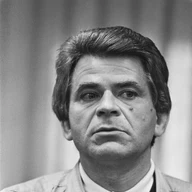
▶ Videos about Boris Spassky on ChessTube (7)
A train leaving Leningrad
He was born in Leningrad on 30 January 1937. He learned chess at five, on a train evacuating the city during the siege. During the war he was sent to an orphanage in Siberia.
In 1947, aged ten, he made his name by beating the reigning Soviet champion, Mikhail Botvinnik, in a simultaneous display in Leningrad. His first coach was Vladimir Zak.
The oldest game of his we hold is from 1952: he was fifteen.
Date, place, the evacuation train, the Siberian orphanage and the simultaneous against Botvinnik: Boris Spassky, English Wikipedia, citing France 24 (27 February 2025) and ChessBase; the coach Zak comes from Leonard Barden's obituary in The Guardian, 28 February 2025. Dates confirmed on Wikidata (Q177310). The year 1952 is the date of his oldest game in our archive.gm_dsLnuh_YFPVA: scacchiera giocabile, con la partita completa sotto.
gm_irNHCoP-8ljQ: scacchiera giocabile, con la partita completa sotto.
1966 and 1969: Petrosian twice
To win the world title he had to beat Tigran Petrosian, and it took him two attempts.
In 1966, in Moscow, he lost: eleven and a half to twelve and a half — three wins, four losses and seventeen draws over twenty-four games. Petrosian kept the title, the first time since 1934 that a reigning champion had won a title defence.
In 1969 he came back and won: twelve and a half to ten and a half. At thirty-two he was world champion.
Across their whole careers, our archive says something about Petrosian that sounds made up: seventy-four games, thirty-seven apiece. Dead even.
The two matches and Petrosian's 1934 precedent: Boris Spassky, English Wikipedia. The scores are recounted on the games in our archive, isolating the event: World Championship 26th gives 11½–12½ over twenty-four and World Championship 27th gives 12½–10½, and both match the published results. The overall seventy-four-game balance is counted on our archive.The King's Gambit
He played everything, but one thing he played when almost nobody at his level dared to: the King's Gambit — 1.e4 e5 2.f4 — which gives away a pawn on the second move and opens up your own king.
Our archive holds thirty-two of his games that begin this way. The record: twenty wins, twelve draws and not a single loss. Among those who lost to that pawn are Bobby Fischer, at Mar del Plata in 1960, and Anatoly Karpov, at Hamburg in 1982.
That he used the King's Gambit at the highest level: Leonard Barden's obituary, The Guardian, 28 February 2025, cited by the Wikipedia article. The thirty-two games, the unbeaten record and the names of Fischer and Karpov are counted on our archive, by searching for games whose moves begin 1.e4 e5 2.f4.The James Bond game
In From Russia with Love, the 1963 Bond film, the opening scene has a chess game between the characters "Kronsteen" and "McAdams". That game is not invented: it is built on a real one, played at the 1960 Soviet championship between Spassky and David Bronstein, with the King's Gambit. Spassky won it — which makes him Kronsteen.
It is in our archive: Spassky–Bronstein, 1-0, ECO opening C36.
That the scene is based on Spassky–Bronstein 1960: Boris Spassky, English Wikipedia, citing ChessBase. The game and the opening code are from our archive (event URS-ch27).Reykjavík 1972
The match with Bobby Fischer, in Iceland, is the most watched chess match in history. Spassky lost: eight and a half to twelve and a half, three wins against seven, with eleven draws — and one game forfeited, the second, when Fischer did not appear.
Spassky's team had prepared the wrong thing: they expected Fischer to open 1.e4 every time with white, and he did not.
But the thing this match is remembered for, here, is something else. After losing the sixth game, Spassky applauded Fischer along with the audience.
Score, the forfeited game and the faulty preparation: Boris Spassky, English Wikipedia. The score is recounted on the twenty-one games in our archive and matches. The applause after game six: Svetozar Gligorić, Fischer vs. Spassky — The Chess Match of the Century, Simon & Schuster, 1972, p. 55. The page on Bobby Fischer tells the same match from the other side.After the title
He did not retire. In 1974 he lost the Candidates semi-final to Karpov; in 1977 he reached the final and lost to Korchnoi; in 1980 he finished seven–seven with Portisch and was eliminated on the better score with black. His last Candidates appearance was in 1985.
In 1976 he emigrated to France and took French citizenship in 1978. In 2012 he returned to Russia.
In 1992 he played the Fischer rematch in Yugoslavia: he lost five to ten with fifteen draws, and earned one million six hundred and fifty thousand dollars. Our archive holds all thirty of those games.
Candidates 1974, 1977, 1980 and 1985, the emigration, French citizenship, the return to Russia and the 1992 fee: Boris Spassky, English Wikipedia, which notes that the circumstances of the 2012 return are disputed. The rematch score is recounted on the thirty games in our archive and matches.Fischer, and the last years
Fischer remains the opponent who beat him most often, but not the one who dominated him: our archive holds fifty-six games, standing twenty-five to thirty-one for Fischer — eleven wins, seventeen losses and twenty-eight draws.
In 2004, when Fischer was detained in Japan at Narita airport and faced extradition to the United States, Spassky wrote an open letter to President Bush. The reason for the detention was Fischer's passport, revoked because he had played in Yugoslavia in 1992 — against Spassky. Spassky began: "I would not like to defend or justify Bobby Fischer", and asked for "only one thing. For mercy, charity". Then came the part people remember: "Bobby and myself committed the same crime. Put sanctions against me also. Arrest me. And put me in the same cell with Bobby Fischer. And give us a chess set."
He kept playing for almost twenty years after the rematch: veterans' events, the Grand Prix du Sénat, simultaneous displays. Our archive holds 191 games of his after 1992, and the last of them close a circle: in December 2009, at seventy-two, he played an eight-game match against Viktor Korchnoi, who was seventy-eight. Korchnoi is the opponent he faced more often than any other in his life — sixty-six games — and those 2009 games are the last we have of him.
The fifty-six-game balance, the 191 games after 1992 and the December 2009 match with Korchnoi are counted on our archive. That Spassky defended Fischer after the Narita detention: Boris Spassky, English Wikipedia, which does not however reproduce the letter. The words of the open letter to Bush, dated 10 August 2004, are taken from the agencies that published it: UPI, "Spassky wants U.S. jail with Fischer", 12 August 2004, and The Japan Times, "Spassky asks Bush to go easy on Fischer", 12 August 2004. The reason for the detention — the passport revoked over the 1992 match — is in the Wikipedia article on Fischer.gm_we9bPJa-eUtQ: scacchiera giocabile, con la partita completa sotto.
gm_u3yW_nSrcFuf: scacchiera giocabile, con la partita completa sotto.
gm_1dWpRWwe81EV: scacchiera giocabile, con la partita completa sotto.
gm_d2xzqOvah_se: scacchiera giocabile, con la partita completa sotto.
gm_XnTaW1F4FBPs: scacchiera giocabile, con la partita completa sotto.
How they describe him
Bobby Fischer wrote of him: "Spassky sits at the board with the same dead expression whether he's mating or being mated. He can blunder away a piece and you are never sure whether it's a blunder or a fantastically deep sacrifice."
In an interview with a Western journalist, Spassky spoke about himself with a candour uncommon among champions: "I prefer to have good relations with my opponent. My chess suffers if I have to play a man I consider unfriendly. When I am in form my style is a little bit stubborn, almost brutal. Sometimes I feel a great spirit of fight which drives me on. But deep down I lack faith in myself. I have often found that I have caught the basic idea of a position, the correct plan, but my great weakness is that I fail to follow the logical pattern through from beginning to end."
On his death, FIDE president Arkady Dvorkovich said: "He was not only one of the greatest players of the Soviet era and the world, but also a true gentleman. His contributions to chess will never be forgotten."
Fischer's line: Larry Evans and Ken Smith, Chess World Championship 1972: Fischer vs. Spassky, Simon & Schuster, 1973, p. 19. The self-portrait: an interview reported in Boris Spassky, English Wikipedia, which names neither the journalist, the outlet nor the year, and carries no footnote for it — we report it as we find it, which is why we do not say when he said it. Dvorkovich: ChessBase, 28 February 2025. Spassky has no Wikiquote page of his own. All three quotations are in their original English.The end
He died in Moscow on 27 February 2025, aged eighty-eight. He had been world champion from 1969 to 1972, and he was the last surviving protagonist of Reykjavík.
Date, place and age: Boris Spassky, English Wikipedia, and Wikidata (Q177310).The tournaments: from the world junior title to the Olympiads
Before the title matches came the World Junior Championship. At Antwerp, in 1955, aged eighteen, Spassky won the final group with eight points out of nine, a full point ahead of the American Edmar Mednis.
The event he contested more than any other is the Soviet Championship, which through the 1950s and 1960s was harder than almost any international meeting. We hold 213 of his games from those editions, from 1955 to 1973: 79 won, 28 lost and 106 drawn. He took the title twice, in 1961 and 1973. In 1956 and 1963 he finished equal first and lost the play-off: two titles missed by a whisker.
In 1964, at the Amsterdam interzonal, he finished equal first with Tal, Smyslov and Larsen on 17 out of 23, and from there began the run that carried him to the world title. Two years later, at Santa Monica, he took the Piatigorsky Cup with 11½ out of 18, half a point ahead of Fischer.
His steadiest results, though, are at the Olympiads. He played for the Soviet Union from 1962 to 1978 and the team took gold six times running, plus silver at Buenos Aires in 1978. He also won individual board gold at Varna 1962 (third board, 11 out of 14) and Siegen 1970 (first board, 9½ out of 12). From 1984 he returned to the Olympiads as France's first board, at Thessaloniki, Dubai and Thessaloniki again.
One last figure shows up only if you count: of the 130 events of at least nine games our records credit him with, 46 ended without a single defeat.
The 1955 world junior title with the score and Mednis's name, the two Soviet Championship wins, the two play-offs lost in 1956 and 1963, the Amsterdam interzonal, the Piatigorsky Cup and all the Olympiad placings and medals: Boris Spassky, English Wikipedia. The individual scores tally game by game with our own records: 8/9 at Antwerp, 17/23 at Amsterdam, 11½/18 at Santa Monica, 11/14 at Varna, 9½/12 at Siegen. The 213 games of the Soviet Championship with their record, and the count of 46 out of 130, are counted on our own holdings; the criterion for the 46 is this: events of at least nine games, excluding matches, simultaneous displays, blitz and rapid. For the 1986 Olympiad our holdings are incomplete, which is why we give no career Olympiad total.The games
Our archive holds 2239 games by Spassky, from 1952 to 2009: fifty-seven years, against more than six hundred and fifty different opponents. The most frequent are Viktor Korchnoi (66 games), Petrosian (74), Fischer (56), Tal (38) and Karpov (38). The positions below come from these games.
Games from PGN Mentor. Games, years and records are counted on our archive. The opponents are "more than six hundred and fifty" rather than an exact number: in the tournament files seven players appear under two different spellings, so the distinct spellings are 672 but the people are between 665 and 672. The moves of a game are a fact, not a protected work.Frequently asked questions
Where do Boris Spassky's positions come from?
From his real games. Every position is a moment in a game Boris Spassky actually played: above the board you can see both players, the tournament and the year. The best move is identified by Stockfish, analysing the position.
Why is the board covered?
So the solution is not given away to anyone scrolling the page. The first two ranks stay readable and the rest is veiled: the whole position appears when you open the puzzle.
Do I need an account to solve Boris Spassky's puzzles?
Yes. The puzzle is played on the training page, where the result counts towards that puzzle's leaderboard and moves the player's Elo rating. Without an account there is no rating to update.
Did Boris Spassky win all these positions?
No. Some come from games he lost, and in those the move to find belongs to his opponent. The box says so next to the board, before you open the puzzle.
What happens after solving or missing one of Boris Spassky's puzzles?
That puzzle's leaderboard appears, along with two ways on: leave, which brings you back to this page, or keep playing, which offers another position taken from Boris Spassky's games.
Can you see the whole game after the puzzle?
Yes. Once the puzzle is over, every move of that game appears, and they are clickable: tap one and the position goes onto the board while <b>Stockfish 18</b> analyses it on the spot, in your browser, showing the best lines. You can move back and forth through the whole game.
How many Boris Spassky positions are there?
At the moment 7. The number grows on its own: a program works through the archive of his games and adds new positions whenever it finds them.
Who wrote the biographical notes?
We wrote them ourselves. The at-a-glance data — dates, places, titles — comes from Wikidata and Wikipedia, under the licence stated below the panel.