Garry Kasparov
▶ Videos about Garry Kasparov on ChessTube (36)
Beginnings
Born in Baku, Azerbaijan, on 13 April 1963, with the name Garri Kimovich Weinstein. His father Kim Moiseyevich died of leukaemia when he was seven; at twelve, at his mother Klara’s request and with the family’s consent, he took her surname. From then on he was Kasparov.
Birth, name at birth and change of surname: Garry Kasparov, English Wikipedia; biographical data also in Wikidata Q28614.Botvinnik’s school
In 1973, aged ten, he entered Mikhail Botvinnik’s school for young talents. That name is worth pausing on: Botvinnik is the man who twelve years earlier had taken the world title back from Mikhail Tal, and who had said of Tal, in a 1962 interview, that in open positions nobody could equal him — but that he was lazy, and that better prepared he would be far more dangerous. It was the school of a man who believed talent without work was not enough.
Year he entered the school: Garry Kasparov, English Wikipedia. Botvinnik on Tal: Chess Life, June 1962, p. 135.1980: Grandmaster at seventeen
Master of Sport of the USSR in 1978, International Master in 1979, Grandmaster in 1980: three steps in three years, the last at seventeen. The games of those years are in the archive — more than two hundred between 1976 and 1982 — and they are played against opponents rated 2200 and 2300: that is normal, at that age nobody gives you the strong tournaments yet. The positions below come from there.
1984–1985: the two matches with Karpov
The first match with Anatoly Karpov began in 1984 and turned into something never seen before. After nine games Kasparov was 4–0 down. He stopped losing: the score froze, the draws piled up, and after forty-eight games — with Karpov leading 5–3 — FIDE president Florencio Campomanes terminated it without result, citing the health of the players. No world champion had ever been crowned, and none dethroned.
The second match was played in Moscow the following year, best of twenty-four games. On 9 November 1985 Kasparov won 13–11. He was twenty-two: the youngest world champion ever.
Match data and its termination: Garry Kasparov, English Wikipedia.1985–2000: fifteen years of the title
Karpov came back three times. In 1986, between London and Leningrad, Kasparov won 12½–11½. In 1987 in Seville it finished 12–12 and the title stayed with him, as the rules provide for the holder. In 1990, between New York and Lyon, 12½–11½ again. Three matches decided by a point or by nothing at all, against the same opponent.
In 1993 he broke with FIDE: he and challenger Nigel Short rejected the match the federation had auctioned for Manchester, were expelled, and played in London that September under the Professional Chess Association. Kasparov won 12½–7½. From that moment the world title was two titles, and it stayed that way for thirteen years.
He lost his in the second half of 2000, in London, to Vladimir Kramnik: 8½–6½. He had never lost a match for the title.
Scores and dates: Garry Kasparov, English Wikipedia.These are the years that earned him his nicknames. The French press called him “l’ogre de Bakou”, the ogre of Baku; the English-language press “the Beast of Baku”. Baku is the city where he was born; the beast, the ogre, was the way he attacked.
Nicknames: “l’ogre de Bakou” in Le Temps and in the French edition of The Times of Israel; “the Beast of Baku”, for his attacking play, in a 2001 AFP dispatch. The Wikipedia article does not mention them.1996 and 1997: the two matches with Deep Blue
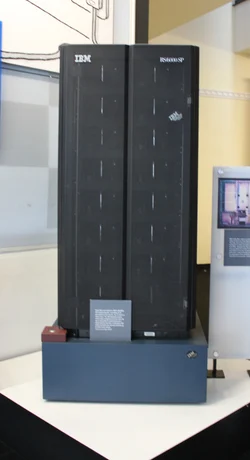
Foto: Anton Chiang from Cupertino, CA, USA — CC BY 2.0, Wikimedia Commons
People remember «Kasparov losing to the computer». But there were two matches, a year apart, and he won the first.
- Philadelphia, 10–17 February 1996 — Kasparov wins 4–2
- He lost the first game though, and that first game is a landmark: it is the first time a computer beat a reigning world champion in a classical game at tournament time control. Then he won the second, two draws, and won the fifth and sixth. Pennsylvania Convention Center. Data: Deep Blue versus Garry Kasparov, English Wikipedia.
- New York, 3–11 May 1997 — Deep Blue wins 3½–2½
- The rematch, and this is the one he lost. He won the first, Deep Blue the second, then three draws; in the sixth he resigned in under twenty moves. It is the first time a reigning world champion lost a match to a computer at tournament time control. Equitable Center. Data: Deep Blue versus Garry Kasparov, English Wikipedia.
Many photographs of those two weeks are in circulation, and not one we can use: they all belong to news agencies. What is below is better. All twelve games of the two matches are in our archive, and the positions that come out of them are played on the board, like every other puzzle on this site.
Worth saying: the program that evaluates every puzzle on this site is called Stockfish, and Deep Blue is its ancestor. Below you can try to find the same move that machine was looking for, or the one Kasparov was looking for against it.
One detail almost everyone gets backwards: after the match it was said that IBM had dismantled Deep Blue. The machine in fact stayed in operation for years, and two of its cabinets are today at the Computer History Museum in Mountain View — the ones in the photograph.
Outcome of both matches, dates and the fate of the machine: Deep Blue versus Garry Kasparov, English Wikipedia.gm_dzdnMm4-nSBB: scacchiera giocabile, con la partita completa sotto.
gm_Bh5T5N_u_P9h: scacchiera giocabile, con la partita completa sotto.
gm_UnU_3G_tDV39: scacchiera giocabile, con la partita completa sotto.
gm_YlZLlbm4WMKl: scacchiera giocabile, con la partita completa sotto.
2851: the record
In 1999 he reached 2851 rating points. It was the highest figure ever recorded, and it stood for fourteen years: Magnus Carlsen passed it in 2013. Between 1982 and 2002 he won eleven Chess Oscars, the award specialist journalists give to the player of the year.
Peak rating and Chess Oscars: Wikidata Q28614. Carlsen passing it in 2013: FIDE rating lists.gm_1INKimC7VUMu: scacchiera giocabile, con la partita completa sotto.
Retirement, and what came after
On 10 March 2005, after winning Linares for the ninth time, he announced that he was leaving competitive chess. Since then he has been involved in politics and writes; he has held Croatian citizenship since 2014 and lives between New York and Croatia.
Date and tournament of his retirement: Garry Kasparov, English Wikipedia. Citizenships: Wikidata Q28614.gm_pemXzz7N_aNa: scacchiera giocabile, con la partita completa sotto.
gm_En_9SAy4Ww7n: scacchiera giocabile, con la partita completa sotto.
gm_GC3RjPc2UCQY: scacchiera giocabile, con la partita completa sotto.
gm_nx5KG-qpbRet: scacchiera giocabile, con la partita completa sotto.
gm_fLTy328RncU4: scacchiera giocabile, con la partita completa sotto.
gm_owP9pg-u7lA-: scacchiera giocabile, con la partita completa sotto.
gm_YWnY1tVeR3VD: scacchiera giocabile, con la partita completa sotto.
gm_Ug2ntoiAHtid: scacchiera giocabile, con la partita completa sotto.
gm_ug9x_dg6RNFA: scacchiera giocabile, con la partita completa sotto.
gm_cwY-PoMT4gse: scacchiera giocabile, con la partita completa sotto.
gm_mgURq0nLhNcv: scacchiera giocabile, con la partita completa sotto.
gm_t0fDNcWiHEJP: scacchiera giocabile, con la partita completa sotto.
gm_BYXEIXK-IuzC: scacchiera giocabile, con la partita completa sotto.
gm_aqnXQOdOYTE9: scacchiera giocabile, con la partita completa sotto.
gm_WVf2TNfo0EZE: scacchiera giocabile, con la partita completa sotto.
Fifteen first places in a row
The Kasparov record that holds up best is not a score, it is a run: between 1981 and 1990 he finished first or equal first in fifteen consecutive tournaments, a record for consecutive professional tournament victories. In the late 1990s he strung together ten more, all of them super-tournaments.
It began early. At Banja Luka 1979, aged sixteen and with a provisional rating of 2545, he won by two points: in our holdings that is fifteen games, eight won, seven drawn and none lost. The following year, at Dortmund, he won the World Junior Championship.
The two events our holdings recompute exactly as the records give them are Bugojno 1982, 9½ out of 13 without a defeat, and Tilburg 1989, 12 out of 14, also without a defeat: ten wins and four draws. At Wijk aan Zee he won in 2000 with 9½ out of 13 and in 2001 with 9 out of 13, both confirmed game by game. Linares, the hardest event on the calendar for twenty years, he won nine times.
At the Olympiads he played eight times, four for the Soviet Union and four for Russia, and the team took gold all eight; nineteen medals in all. Out of 82 Olympiad games he lost three: our holdings have 79, and the defeats are exactly three. Across everything we hold of his, the engagements of nine games or more come to 85, and in 39 of them he lost nothing.
The fifteen consecutive first places between 1981 and 1990 as a professional record and the ten that followed, Banja Luka 1979 with its margin and provisional rating, the 1980 World Junior title at Dortmund, Bugojno 1982, Tilburg 1989, Wijk aan Zee 2000 and 2001, the nine Linares wins and the eight Olympiads with team gold, the nineteen medals and the total of 82 games with three defeats: Garry Kasparov, English Wikipedia. The records for Banja Luka 1979, Bugojno 1982, Tilburg 1989, Wijk aan Zee 2000 and 2001, the 79 Olympiad games and the count of 39 events out of 85 without a defeat are counted on our own holdings; the criterion for the 39 is: events of at least nine games, excluding matches, simultaneous displays, blitz and rapid. Of the entry's 82 Olympiad games we hold three fewer, but the three defeats are the same three.The games
The archive holds 2,119 of his games, from 1976 to 2021. Positions appear in the sections of the years they belong to, as the engine analyses them.
Frequently asked questions
Where do Garry Kasparov's positions come from?
From his real games. Every position is a moment in a game Garry Kasparov actually played: above the board you can see both players, the tournament and the year. The best move is identified by Stockfish, analysing the position.
Why is the board covered?
So the solution is not given away to anyone scrolling the page. The first two ranks stay readable and the rest is veiled: the whole position appears when you open the puzzle.
Do I need an account to solve Garry Kasparov's puzzles?
Yes. The puzzle is played on the training page, where the result counts towards that puzzle's leaderboard and moves the player's Elo rating. Without an account there is no rating to update.
Did Garry Kasparov win all these positions?
No. Some come from games he lost, and in those the move to find belongs to his opponent. The box says so next to the board, before you open the puzzle.
What happens after solving or missing one of Garry Kasparov's puzzles?
That puzzle's leaderboard appears, along with two ways on: leave, which brings you back to this page, or keep playing, which offers another position taken from Garry Kasparov's games.
Can you see the whole game after the puzzle?
Yes. Once the puzzle is over, every move of that game appears, and they are clickable: tap one and the position goes onto the board while <b>Stockfish 18</b> analyses it on the spot, in your browser, showing the best lines. You can move back and forth through the whole game.
How many Garry Kasparov positions are there?
At the moment 20. The number grows on its own: a program works through the archive of his games and adds new positions whenever it finds them.
Who wrote the biographical notes?
We wrote them ourselves. The at-a-glance data — dates, places, titles — comes from Wikidata and Wikipedia, under the licence stated below the panel.